
Partition in Punjab, through the lens of Margaret Bourke-White
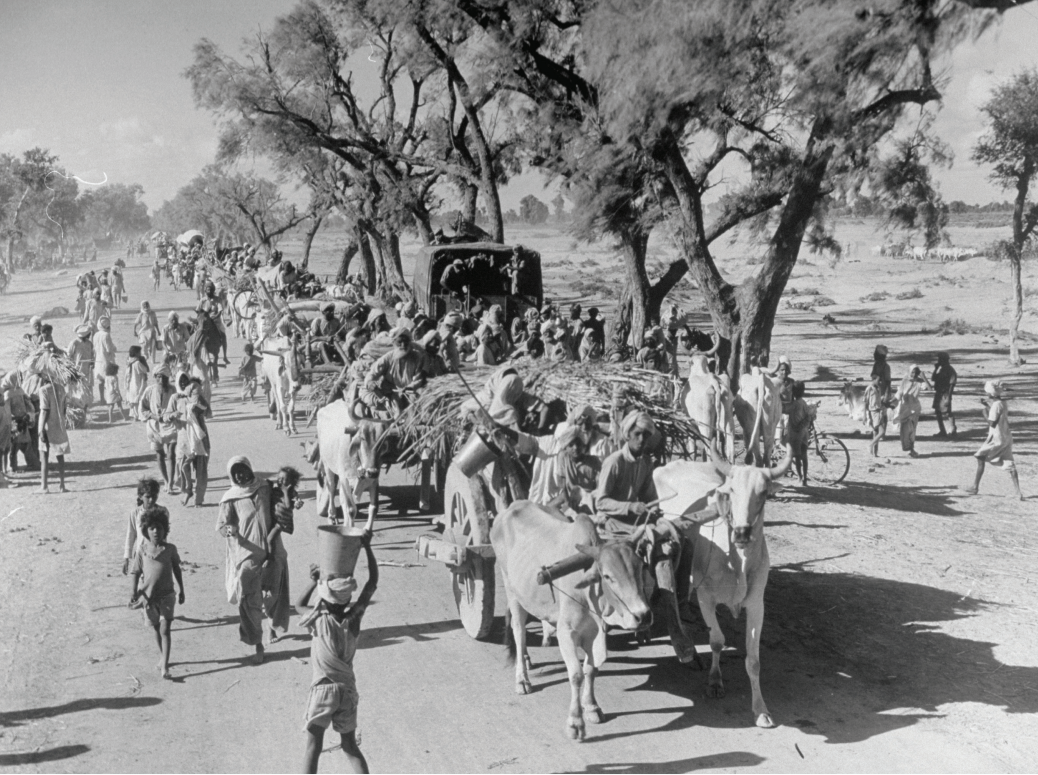
A convoy of Sikhs head east to independent India after leaving their homes in West Punjab, Pakistan, 1947. PHOTOGRAPH BY MARGARET BOURKE-WHITE. THE LIFE PICTURE COLLECTION VIA GETTY IMAGES.
The Punjab was ripped in two by Cyril Radcliffe’s border, which was announced on 17 August 1947, two days after Independence.
Margaret gave the world her iconic images of the genocidal conflict that ensued and she composed memorable text to accompany them.
She is quoted, chillingly, in Freedom at Midnight by authors Dominique Lapierre and Larry Collins, describing Sikh attacks on Muslim passengers fleeing on trains:
'Margaret, as Life Magazine’s great photographer, remembered seeing a group of three Sikhs in Amritsar station ‘venerable in their long beards and wearing the bright blue turbans of the Akali sect, sitting cross-legged along the platform’.
Each ‘held a long-curved sabre across his knee – waiting patiently for the next train’.
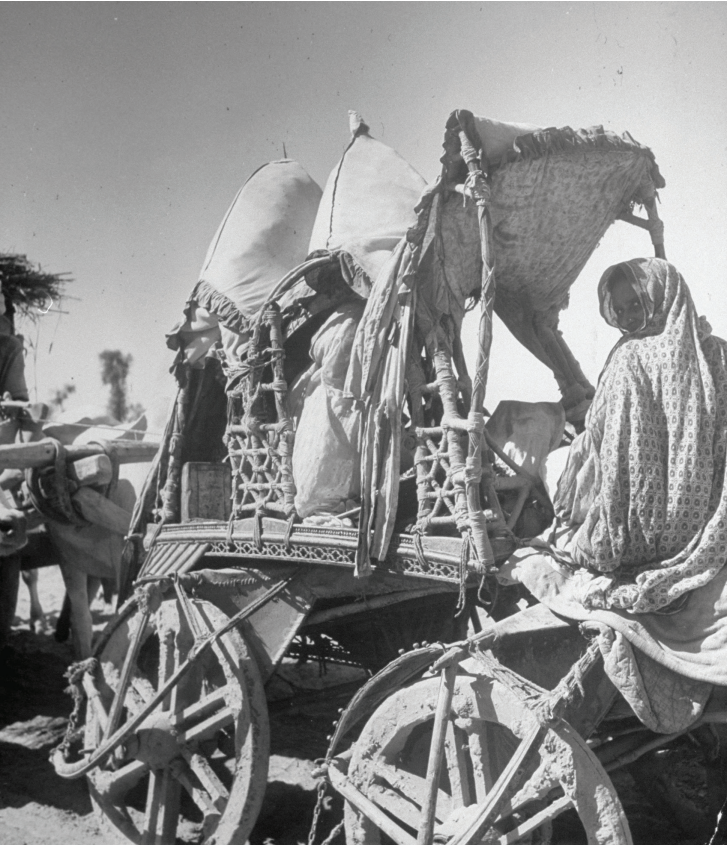
Sikh women travelling to East Punjab in independent India in a four-wheeled, bullockdrawn carriage with their family’s possessions, 1947. PHOTOGRAPH BY MARGARET BOURKE-WHITE. THE LIFE PICTURE COLLECTION VIA GETTY IMAGES.
Captions for Margaret Bourke-White’s photographs in Time Life magazine for 3 November 1947 include the following:
"The emigrant trains of crude wooden carts drawn by bullocks creak across the barren land of the Punjab all day long.
In this convoy, starkly silhouetted against the vivid Indian sky, are 45000 uprooted Sikhs on their way to the Ferozepore and Ludhiana districts of the eastern Punjab.
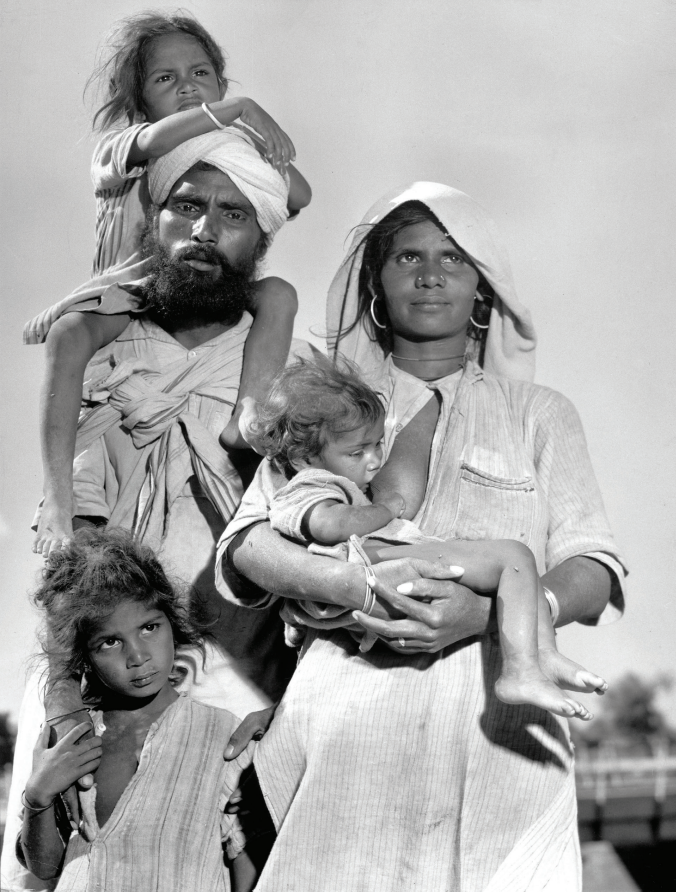
A Sikh family from West Punjab in Pakistan en route to India after the Partition, 1947. PHOTO BY MARGARET BOURKE-WHITE. THE LIFE PICTURE COLLECTION VIA GETTY IMAGES.
Unlike the U.S. wagon-train pioneers, hopefully en route to a new land, these migrants have little to look forward to and are losing everything that they cannot carry with them.
Despite the presence of an escort of Gurkha soldiers, thousands of stinking bodies along the road constantly remind the travelers that they may never reach safety."
-- Extract from Eleanor Nesbitt's 'Sikh: Two Centuries of Western Women’s Art and Writing', which you can buy here.