
'Never to be forgotten and never to be forgiven'
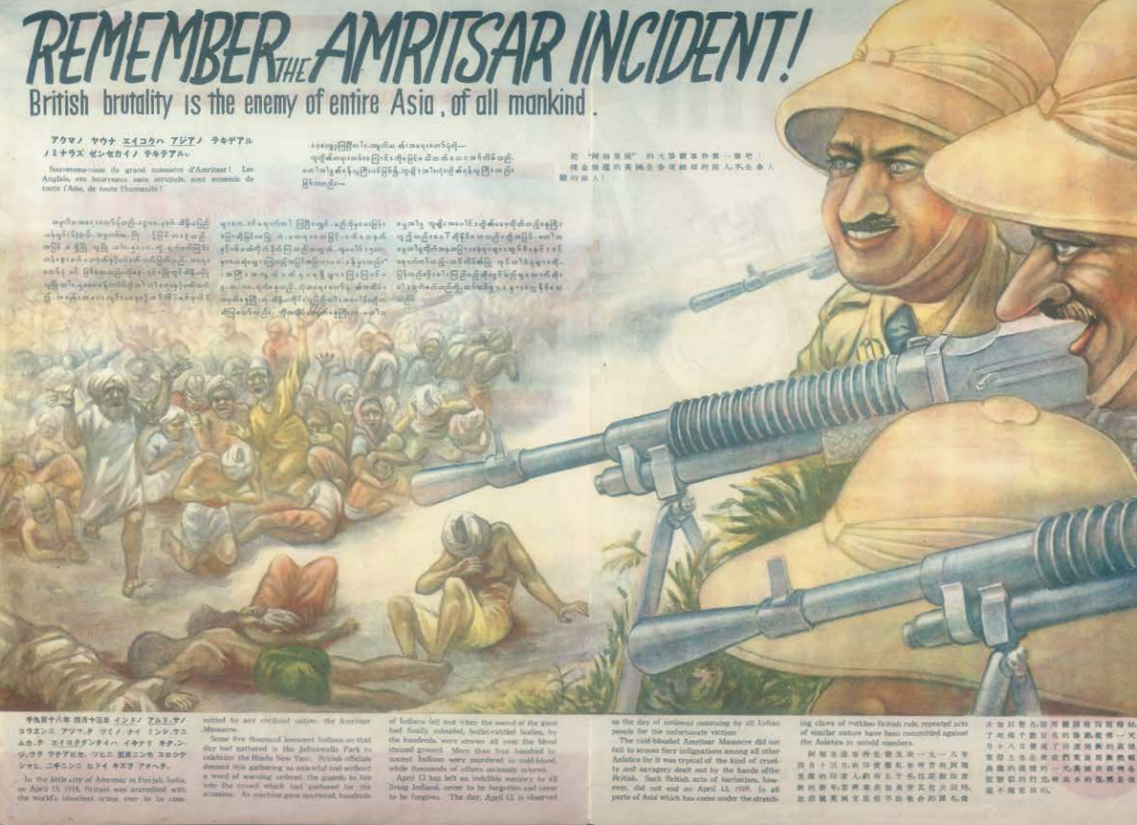
Trustees of the Liddell Hart Centre for Military Archives
'In the little city of Amritsar in Punjab, India, on April 13, 1918 [sic], Britain was accredited with the world’s bloodiest crime ever to be committed by any civilized nation - the Amritsar Massacre.
'Some five thousand innocent Indians on that day had gathered in the Jalianwalla Park to celebrate the Hindu New Year.
British officials deemed this gathering as unlawful and without a word of warning ordered the guards to fire into the crowd which had gathered for the occasion.
As machine guns sputtered, hundreds of Indians fell and when the sound of the guns had finally subsided, bullet-riddled bodies, by the hundreds, were strewn all over the blood stained ground.
More than four hundred innocent Indians were murdered in cold-blood, while thousands of others seriously injured.
April 13 has left an indelible memory to all living Indians, never to be forgotten and never to be forgiven.
The day, April 13, is observed as the day of national mourning by all Indian people for the unfortunate victims.
'The cold-blooded Amritsar Massacre did not fail to arouse fiery indignations among all other Asiatics for it was typical of the kind of cruelty and savagery dealt out by the hands of the British.
Such British acts of barbarism, however, did not end on April 13, 1918 [sic]. In all parts of Asia which has come under the stretching claws of ruthless British rule, repeated acts of similar nature have been committed against the Asiatics in untold numbers.'
'Eyewitness at Amritsar' brings together a remarkable collection of illustrations, including some never-before-published photos, paintings and political cartoons and direct quotes from those who lived through this historic event and its aftermath.