
Memories of 1947, Shadows of 1984: Patricia Uberoi’s Story
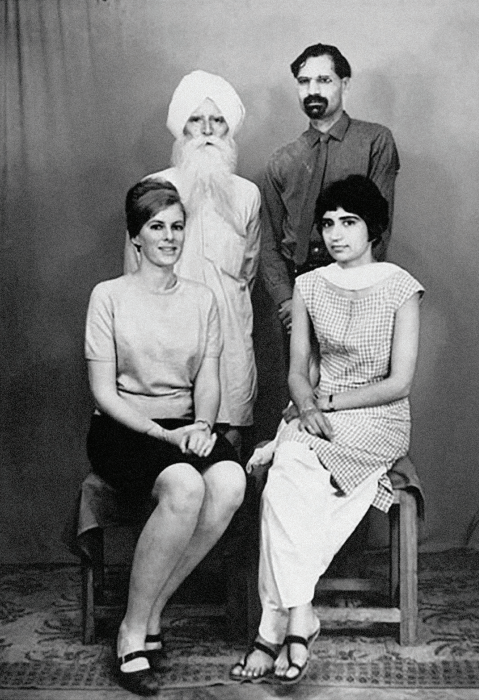
Patricia Uberoi with her filmmaker-daughter, Safina, husband (standing, right), Jit, and elderly father-in-law, Papaji, in India, c. 1980. Courtesy of Safina Uberoi.
Patricia Uberoi is an Australian sociologist who recalled the events of 1984 in her daughter Safina Uberoi’s award-winning film, My Mother India (2001). She married sociologist, Jit Pal Singh Uberoi. Through her marriage, she became closely connected to Sikh family life and history.
In June 1984, tragedy struck the family just as India was entering one of the most traumatic moments in its recent history. Patricia’s Sikh father-in-law (Papaji) died at the same time the Indian Army launched Operation Blue Star at Harimandir Sahib, Sikhism’s holiest shrine.
In the final days of his life, as dementia advanced, Papaji began reliving the terror of 1947. Before he died, he recalled scenes from Lahore during the Partition: curfews, burning streets and the constant fear of attack. The violence he remembered from that time seemed to foreshadow what would soon unfold in Delhi later that year, when many Sikhs were attacked and killed in the aftermath of the Prime Minister’s assassination.
After the funeral, the family gathered around the radio. News came that the army operation at the Golden Temple had been completed.
“Suddenly everybody burst into tears,” Patricia later recalled. “There was a sense of terrible mourning and violation — even impending gloom.”
For Papaji, the memories of 1947 had never faded. The trauma of Partition remained vivid decades later, resurfacing in his final days. His story revealed how the psychological repercussions of 1947 continued to shape the lives of survivors, sometimes re-emerging in moments of renewed crisis.
Read more of her account in Eleanor Nesbitt’s ‘Sikh: Two Centuries of Western Women’s Art & Writing’, which you can buy here.