
From Flamenco to Punjab: The Remarkable Life of Anita Delgado Briones
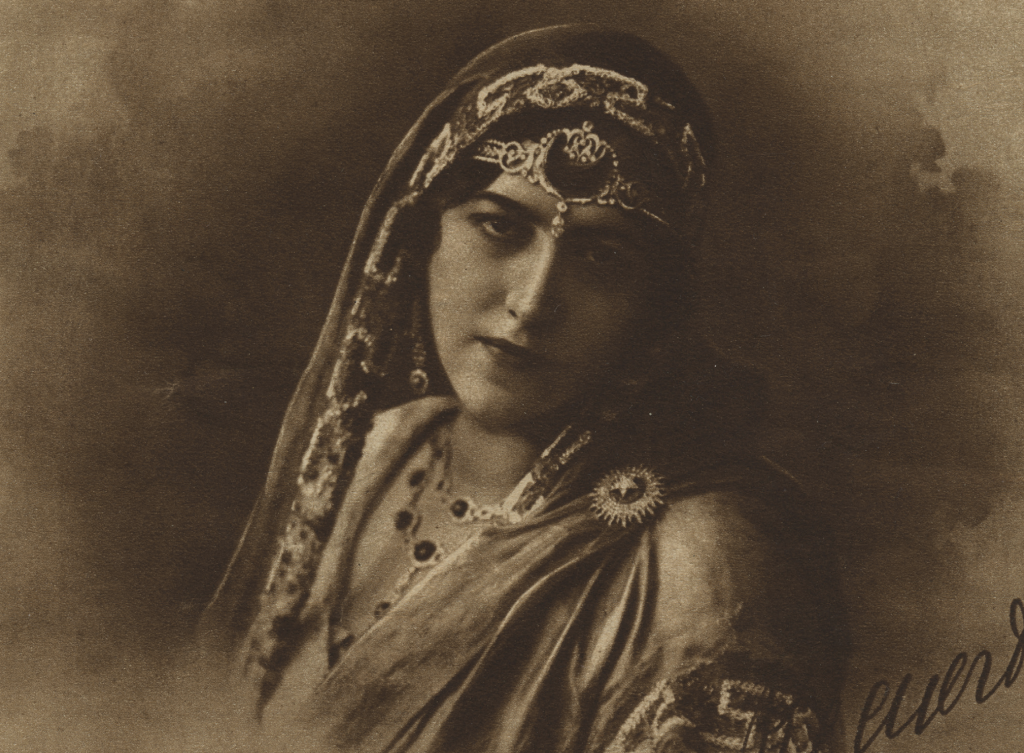
Anita Delgado Briones who became known as Maharani Prem Kaur following her marriage to the Maharaja of Kapurthala, c. 1909.
Anita Delgado Briones (1890–1962) lived a life that reads like a novel: one that crossed continents and cultures. Born in Spain and trained as a flamenco dancer, she would go on to become Maharani Prem Kaur of Kapurthala, entering a world far removed from her origins.
Anita’s story began in Europe, where she met Jagatjit Singh, the cosmopolitan Maharaja of Kapurthala. Known for his love of European culture and style, the Maharaja was captivated by the young dancer. What followed was an extraordinary proposal that would change Anita’s life forever.
In January 1908, at just seventeen years old, Anita married the Maharaja and took on a new name: Maharani Prem Kaur. She moved from Spain to India, stepping into the role of a Sikh queen in the princely state of Kapurthala.
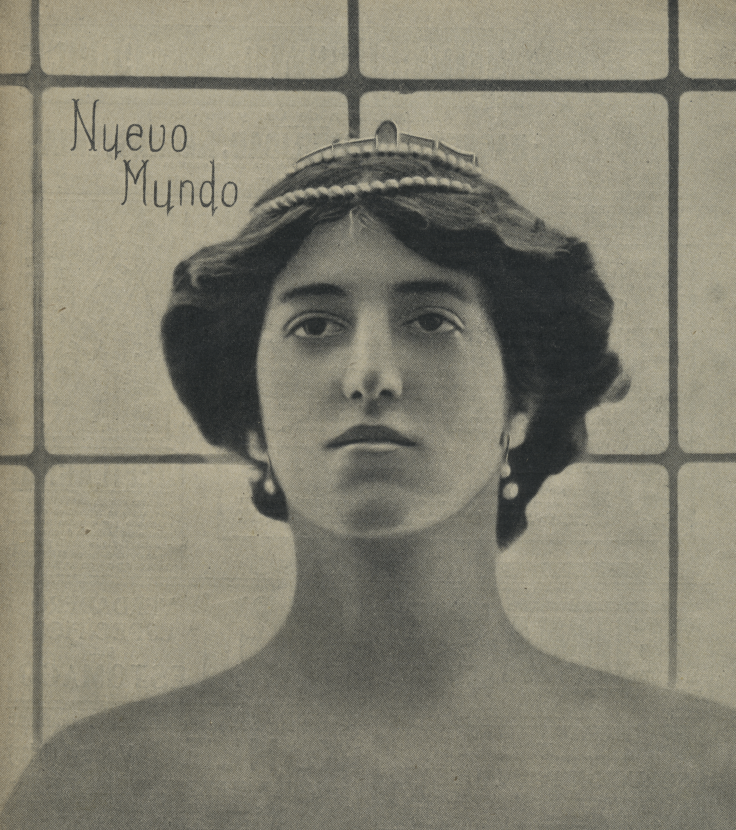
Anita Delgado Briones on the front cover of the Spanish magazine, Nuevo Mundo, 24 December 1908.
On her voyage to India, Anita began keeping a diary. These writings provide a rare and intimate glimpse into her thoughts as she navigated a life between worlds. Through her diary, we see a young woman adapting to new customs, expectations and responsibilities.
Her early years in India were marked by grandeur. The wedding itself was lavish, symbolising the merging of two very different cultures. Just four months after their marriage, Anita gave birth to their son, Ajit Singh.
Anita’s life was not confined to the palace. During the First World War, she travelled to France to visit and support the Kapurthala contingent serving on the front lines. This act reflected both her courage and her commitment to her role as Maharani, as she engaged with global events that connected India to the wider world.
Despite the glamour and status, Anita’s marriage was not without challenges. Over time, tensions grew, and in 1925 the couple separated. Her writings offer insight into this period as well, revealing a more personal and complex side of her story, one that moves beyond fairy-tale narratives of royal life.
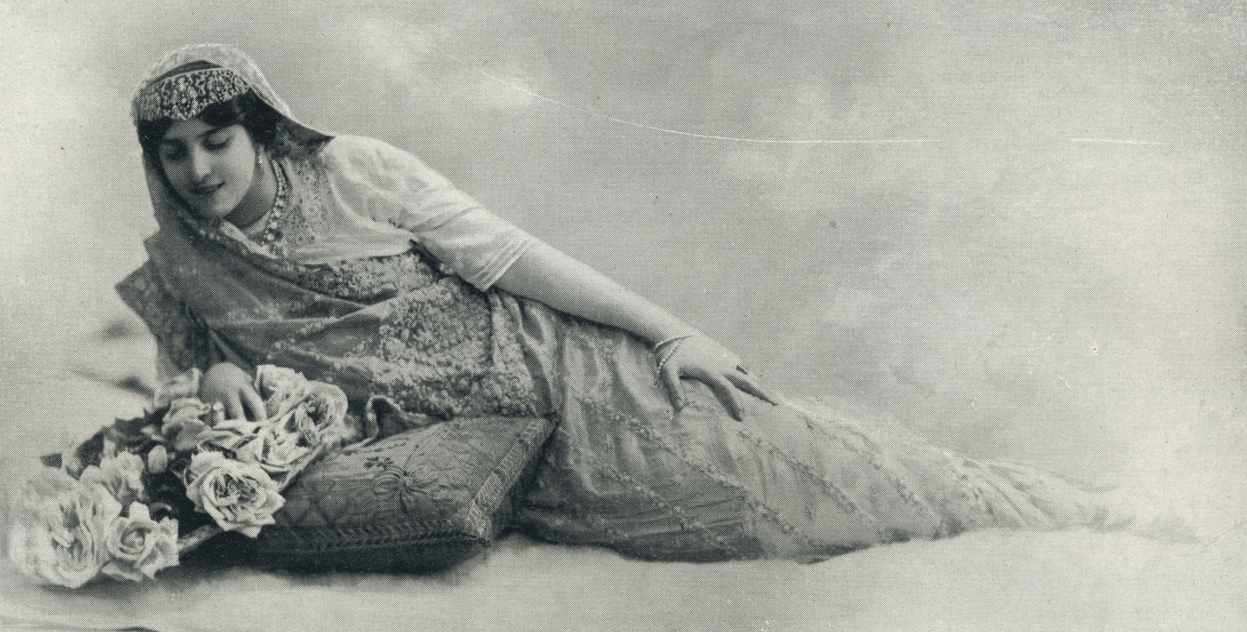
Anita Delgado Briones reclining in a sari, c. 1910.
As a Spanish woman who became a Sikh Maharani, she occupied a unique space between cultures. Her story is not simply one of romance or royalty, but of adaptation and resilience in her rapidly changing world.
Read more of her account in Eleanor Nesbitt’s ‘Sikh: Two Centuries of Western Women’s Art & Writing’, which you can buy here.