
Helena Blavatsky on Sikhism and British Rule
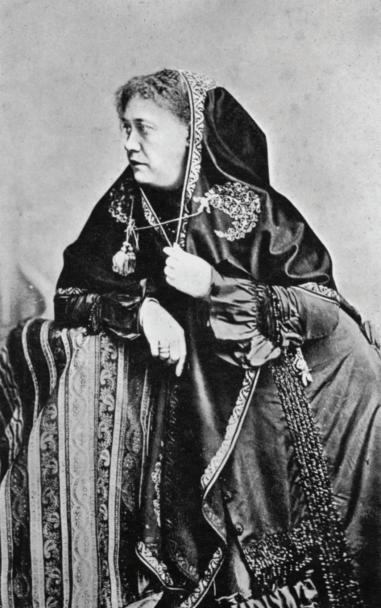
Helena Petrovna Blavatsky at Ithaca, New York, 1875, the year she co-founded the Theosophical Society with Henry Olcott. The Picture Art Collection / Alamy Stock Photo.
Helena Petrovna Blavatsky (Yelena Petrovna von Hahn | 1831–1891) was a Ukrainian-born occultist and co-founder of the Theosophical Society, a syncretistic spiritual movement.
After extensive travels, she lived in India in the 1880s. Helena wrote extensively about Sikhs and Sikhism during this time.
She praised Sikhs for their idea of ‘a pure monotheism in the abstract idea of an ever unknown Principle’ that they ‘elaborated … into the doctrine of the “Brotherhood of Man”’.
She explained that, according to Sikhs, ‘we have but one Father-Mother Principle, with “neither form, shape, nor color,” and we ought all to be, if we are not, brothers irrespective of distinctions of race or color’.
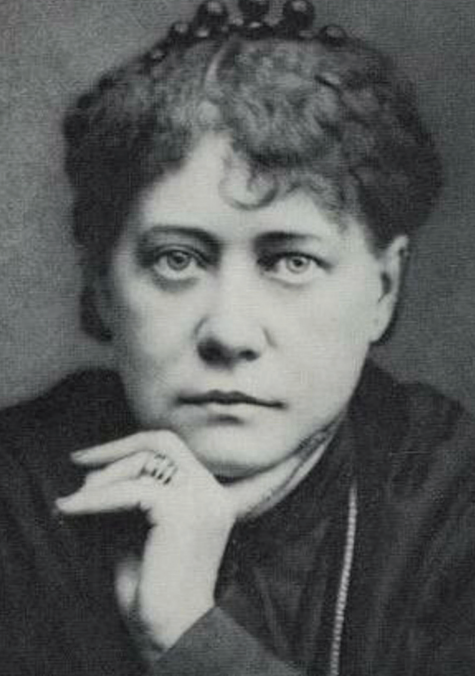
Helena Petrovna Blavatsky, c. 1880. The History Collection / Alamy Stock Photo.
Helena was also a harsh critic of British rule in India. Writing for her Russian readership, Helena’s opinion on unfolding events was markedly different from her British contemporaries'.
She railed at the ‘cheap imitation products from Manchester’ swamping the bazaar in Amritsar and the plundering of its riches.
She also ridiculed the uniformed Britishers at the viceroy’s Lahore durbar in 1880 for resembling ‘monkeys in red Generals’ uniforms’ and she illustrated their disproportionately violent quashing of any unrest.
See more of her writings in Eleanor Nesbitt’s ‘Sikh: Two Centuries of Western Women’s Art & Writing’, which you can buy here.